Fava beans have travelled across cuisines and centuries, finding their way into kitchens around the world. They go by many names: fabas, broad beans, Saubohne, bakla, fūl, or maccu. In some regions, they are still a beloved staple; in others, they’ve quietly slipped to the back of the cupboard. Today, many believe it’s time to bring this humble legume back to the table.
A Rich Cultural History
In the Mediterranean, fava beans are deeply woven into food culture. Italians mash them into creamy purées like fave e cicoria or toss them through rustic pastas. In Portugal, they simmer in hearty stews with herbs and meat.
In Egypt, fava beans are the heart of ful medames, one of the world’s most iconic breakfasts. Some historians even believe that the original falafel was a fava fritter before chickpeas took over.
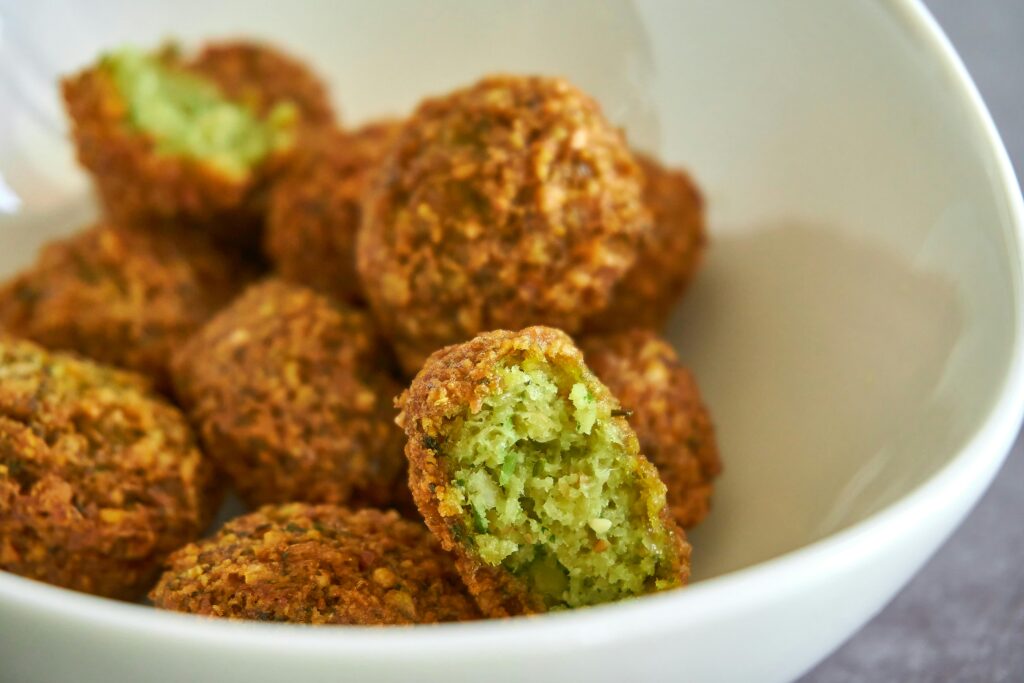
In Lebanon and Syria, fava beans remain a favourite street food, served warm and spiced from market stalls. Across North Africa, they’re cooked into rich stews and smooth purées. Even South America embraced them after European colonisation, incorporating fava beans into local dishes in places like Peru and Brazil.
The Historic Decline
While fava beans still thrive in southern Europe and beyond, northern and eastern countries like Germany, Scandinavia, Poland, and Switzerland now eat far fewer.
Yet they were once a kitchen staple. In medieval and early modern times, people relied on them for protein and calories. Over time, though, their popularity faded.
Agricultural policies began to favour cereals, while meat and potatoes became symbols of prosperity. Fava beans, with their tough skins and need for soaking, suddenly felt outdated in a world moving toward convenience and industrialised food.
Ready for a Comeback
Now, fava beans are making a quiet comeback. Chefs, farmers, and curious home cooks are slowly rediscovering them, nudged along by the sustainable food movement.
The recent EAT-Lancet Commission 2025 report also reminded us (again) that we need to eat fewer animal-based products and more legumes. And really, what better candidate to lead that shift than the humble fava bean?
Soil Regenerators
Fava beans restore the land. They pull nitrogen from the air and lock it into the soil, cutting the need for synthetic fertilisers, saving money, and preventing pollution.
Their roots dig deep, loosening the earth and helping fields hold onto water even during dry spells.
When in bloom, their flowers attract bees and other beneficial insects, boosting local biodiversity.
Used as cover crops, they act like soil protectors; shading the ground, suppressing weeds, reducing water evaporation, and keeping nutrients in place for the next crop.
Growing more fava beans also makes us rethink how we use land. Producing meat from animals requires vast amounts of feed, water, and energy, yet only a fraction of the protein and calories in that feed become edible meat.
Eating fava beans directly is far more efficient: they convert sunlight, water, and nutrients straight into protein and energy for people with much less waste.
Healthy for People, Too
Fava beans are protein-rich, high in fibre, and packed with vitamins and minerals, including folate, iron, magnesium, and potassium.
One cup of cooked fava beans provides around 13 grams of protein, comparable to other legumes like lentils or chickpeas, but with the added benefit of resistant starch, which supports gut health.
Their fibre content helps regulate blood sugar and cholesterol levels, while the rich micronutrient profile supports heart health and metabolism.
Reviving an Old Friend
Reconnecting with fava beans means rediscovering traditional dishes that once nourished generations, like Fava Bean and Chard Stew from Switzerland, or Bohnenmus, a mashed fava bean dish once common in rural Germany and the Netherlands, served with rye bread or roasted onions.
Or it can mean exploring food cultures that never let the bean disappear: from Egypt to Italy, Lebanon to Morocco, where fava-based recipes have been perfected over centuries.
Still, barriers remain: many people no longer know how to prepare them or are discouraged by their longer cooking times. And in many regions, supply chains for fava beans remain weak compared to soy or lentils.
Seeds of Change
These barriers can be overcome aschange often begins small. A family experiments with fave e cicoria at home. A chef reimagines fava beans in a modern dish. A farmer plants them, notices healthier soil, and adds them to his rotation.
Slowly, these choices ripple outward.
More Than a Bean
Fava beans may not be a miracle crop, but they come remarkably close. They heal the soil, nourish our bodies, and (re)connect us with culinary traditions.
They remind us that regeneration doesn’t always demand technical innovations or grand designs. Sometimes, it’s about looking back, rediscovering what already worked, and having the courage to bring it back to the table.